
Retail to ‘Me-Commerce’
The Personalization Imperative
A personalized shopping experience, the retail experience relevant for ‘Me’ (the consumer). Olabi provides omni channel retail experience based on consumer history. A fully integrated Digital Marketing and Loyalty Program allows you to reach out and build loyalty.
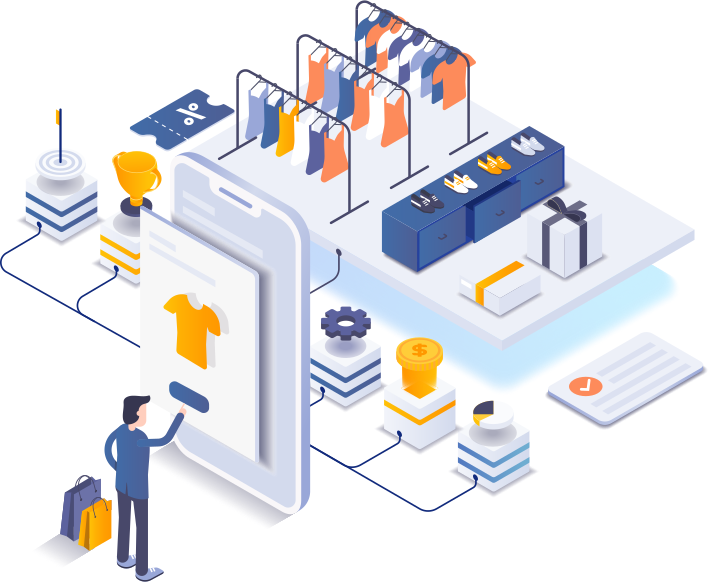
Personalisation
Personalization combining historical, behavioral, and profile data resulting in improving customer loyalty and revenue.
- Personalization Engine
- Upsell / Cross Sell
- Personalized Offers and Promotions
Client Telling
Enable your store associates to create a personalized shopping experience by providing them a 360-degree view of the Consumer to improve walk-in conversions.
In Aisle Store Associate App.
Digital Marketing
Leverage a 360° view of your Consumers, including store purchases and visits, to enhance your cross channel customer service and Marketing.
- Consumer Segmentation
- Social Media Integration
- SMS & Email Mktg
Loyalty
Create multichannel loyalty programs that incentivize customers wherever they shop, build your customer base and generate repeat sales.
- Multi Tier Program
- Flexible Points and Rewards
- Personalized store offers
- Earn / Redeem integration with POS
- Cross Channel loyalty deployment.
Consumer Insights
Strengthen every Consumer relationship from a single source of truth. See all Consumer engagements across online and store.
- Profile. Purchases & Returns
- Orders Status
- Product Preferences. Price Preference
Omni Channel
Omni channel-as-a-Service, your O2O (Online to Offline) platform.
Transform your retail store into a store fulfillment center. We ensure that your company Webstore, Marketplaces as well as Endless Aisle (Inter-store orders) can be fulfilled at the nearest store.
The OMS as well as our real time inventory view across channels ensures 100% fulfillment.
Boost margins and conversion rates with store fulfillment options, such as BOPIS, or Ship-from-Store.
Web Store, Market Places
Our Webstore and Market Place integration capability allows you to integrate and fulfill orders, from these channels, at the store.
- Product Catalog Mgmt – Price Mgmt
- Order fulfilment, Logistics
- Marketplace aggregator integration
Endless Aisles
Empower your store associates to save the sale by allowing them to sell inventory from any location.
- Endless Aisle Orders & Fulfilment
- Store Associate App
- One Click POS Integration
Cross Channel OMS
Book Multi Channel Orders , Apply rules-based item-level order routing, based on location inventory availability & configurable Business rules.
- Inventory Reservation
- ‘Cost of Service’ Algorithms
- Allocation of orders to locations
- Set up Fulfilment Store Clusters
Enterprise Inventory View
Olabi provides you a single view of your inventory, referred to as a single stock pool, regardless of the channel or location ensuring you never lose a sale.
- Real time Inventory View
- Inventory reservation
- E-Com Integration of Stock availability

Store fulfillment
From Clicks to Bricks.
Position your retail stores at the heart of your e-commerce strategy.
Digital Footfalls drive additional in-store revenues and improve inventory ROI.

Ship from Store / Click to Collect
Offer consumers more flexibility and control over when and where they collect their purchases. Reduce your logistics service costs while improving delivery times. Improve your store product gross margins.
Order Pick / Pack / Invoice
Ensure accurate order fulfillment and accurate inventory with automatic picking validation and discrepancy flagging.
- Order Acceptance / Rejection
- Order re-routing
- Pick slip – Pack slip
- Partial fulfillment handling
- Invoice
Omni Returns & Exchanges
Enable cross-channel returns and exchanges from a single system. Manage refunds and non deliveries with minimal effort and accuracy.
- Return Order Preparation
- Non Delivery – Return to Origin
- Store receipts of Return Items
- Automated Refunds
Logistics
Olabi is pre integrated with leading Logistics companies to ensure accurate Tracking of shipments.
- Forward / Return AWB generation
- Shipment Status tracking
- Return to Origin
- COD Collections
Cross Channel Financial Reconciliation
A one click view of all Cross Channel transactions enables you to easily reconcile Sales, Collections, Receivables and payables across Partners.
- Channel wise Sales / Returns Report
- Chanel wise Tender Reconciliation
- Channel wise Order fulfillment
- Orders / Returns reconciliation
- Logistics – COD report
Phygital Store
Phygital retail creates a shopping journey in which physical experiences and digital technologies interact, blend and complement one another, to create consumer in-store delight.
Cloud & Mobile POS
Complete transactions without ever leaving the consumer’s side, reducing wait times and increasing sales. Combine store and endless aisle purchases into one transaction for a seamless checkout experience.
- Mobile Phone – Kiosks – Tablets
- Sales – Inventory – Loyalty
- Endless Aisles
Store Associate App
The Store Associate App places all relevant information at the store associate’s fingertips and empowers them to inspire and delight their consumers. It also allows them to keep close track of their tasks and monitor the success of the store.
- Inventory Check
- Consumer History
- Que Busting
- Order Fulfilment
IOT – Beacons & RFID
The Internet of Things allows stores to establish connection with consumers as well as improve inventory efficiency.
- Instore Proximity Marketing – Beacons
- Inventory management with RFID
Retail Ecosystem Integrations
Integrations available for stores operations including Malls ADSR, Payment Gateways & GST.
- Payment QR Code & Gateways
- GST E-Invoice Portal
- Mall ADSR reports
- SMS & E Receipts
- Footfall Counters
- Day end ERP
Store Finance
Manage your store finances with day end finance reconciliation processes.
- Sales Tender reconciliation
- Till Shift Cash
- Store expense entries
- Cash & Bank transactions
- Payment Gateway receivables
Inventory
Accurate, Real-Time Visibility into your Inventory across all stock points.
Manage inventory across your stores, eCommerce and Marketplaces assuring you
improved inventory ROI.
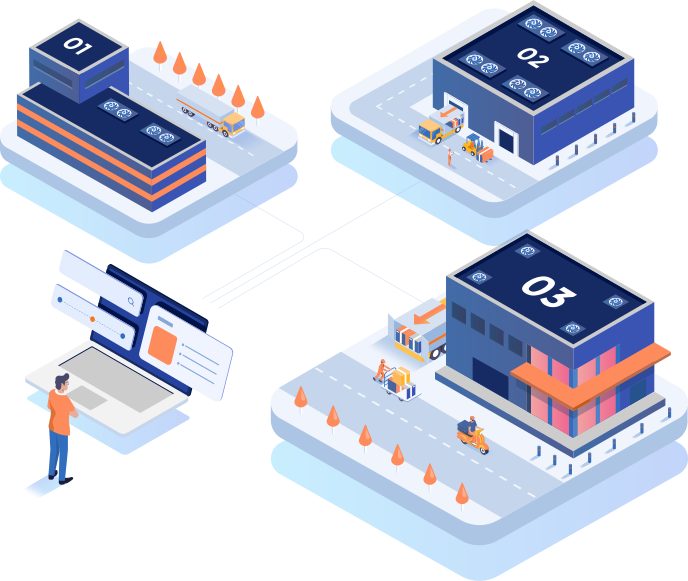
Real Time Enterprise View
Have a real time omni channel view across multiple stock locations. Our reservation algorithms assure 100% consumer order fulfillment irrespective of the order channel.
- Multiple Stock locations
- Stock Reservations
- Location-Bins to segregate stock
Inventory Transactions
Streamline store inventory management with processes for Procurement, Receiving, Stock Counts and Transfer out.
- Purchase Orders, Receipts
- Stock Count, Inter Location Transfers
- Planograms and auto replenishments
- Store Fixed Assets management
- GST compliance
RFID Ready
Leverage RFID technologies for greater efficiency and accuracy, while improving store staff productivity
Merchandise Hierarchy
Having the right taxonomy for your products allows you to view performance by category and trends in real-time, right down to the item level.
- 5 level Hierarchy
- Hierarchy level Process controls
- Sales \ Consumable \ Fixed Asset Categorization
- Product Attributes
- Product Variants (Size, Color etc)
- Product Multimedia content
Item Transaction Attributes
Transaction flexibility is provided to cover product-sku operations.
- Product Serial No Tracking
- Mfg Batch No & Expiry Date
- Multiple MRP per SKU
- Multiple EAN codes per SKU
- Multiple vendors per SKU
Finance & Analytics
Extensive Brand / Category / Product level analytics are available as dashboards and reports ensuring visibility of your Inventory KPI’s.
- Item Cost and Valuation
- Gross Margins
- Sell Throughs, Rate of sale
- Inventory Age
Omni Insights
Any Role. Any Department. One Solution.
Create data stories, generate actionable insights, and transform your everyday work
with data-driven decision making. Keep a finger on the pulse of your business.
Consumer Insights
Consumer behavior, such as buying habits and experience data, that yields insights to help make key business decisions. Insights from consumer analytics can inform marketing, pricing, and Loyalty programs promotion,
Product Insights
Optimize your stock with Analytics View critical KPI’s and streamline key Merchandising decisions allowing your merchandise planning and execution teams to drive profitability and improve inventory ROI.
- Channel wise Merchandise performance
- Brand Category analysis
- Product – Inventory KPI’s
Omni Sales Insights
Dashboards to show sales, basket size, discounts, returns, etc. across all key channels and consumerr touchpoints.
Store Operations Insights
A day-to-day transactional view of retail business is crucial to teams in charge of store operations and Omni channel services.